Copper Mt.

Copper Mt.

Monday, April 30, 2012

End of the line


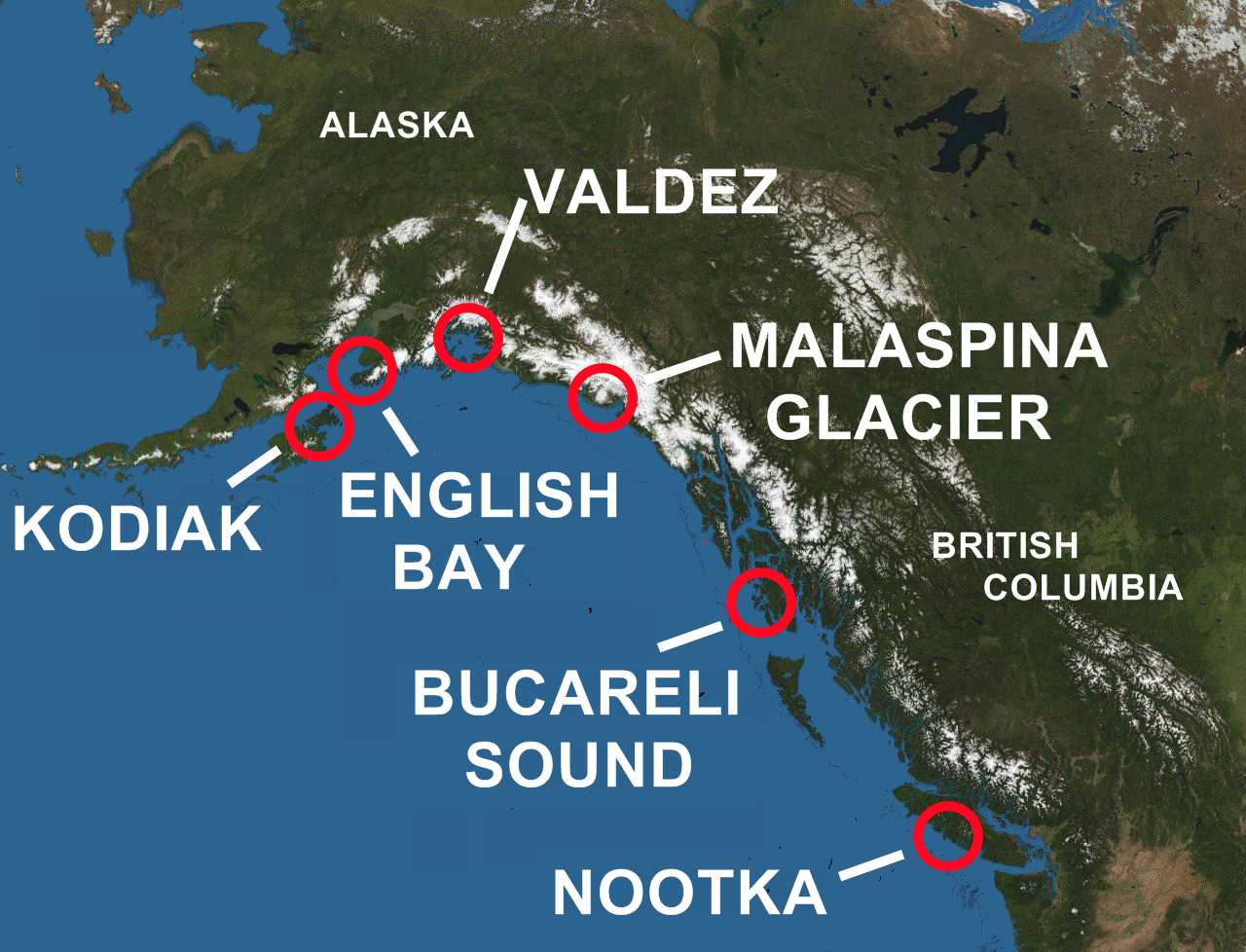
Timeline AKA part 1 of the Prince William Sound

 
Smith's in Tatitlek
                                    2011: Smiths move to Tatitlek. This is the start of an Alaskan adventure for the Smith family. 
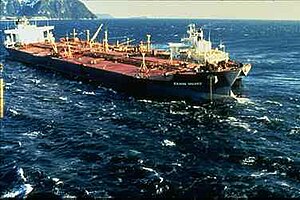


Exxon-Valdez leaking oil
                                    1989: Exxon-Valdez Oil Spill, March 24.  This occurs on Bligh Reef about 10 miles from the village of Tatitlek.  This event fundamentally changes the native villages around the sound.  The destruction of fishing and surrounding environment forced many to leave the villages and take work in 


Pipeline terminal in Valdez
                                        1977:  First oil flows through the pipeline.  The pipeline ends in Valdez resulting in oil tanker traffic heading through the Prince William Sound.  This increases the wealth of the whole region and provides many jobs for local Alaskan Natives.


"Old" Chenega after the earthquake
                                       1964:  Great Alaska Earthquake, March 27.  This is devastating to the village of Chenega when it is wiped out by a tsunami.  23 people were killed in the village a third of the population.  The surviving Chenega residents moved in with family in different villages around the sound.  


Cordova shipping trains for the war
                                       1941-1945:  World War II; black-out curtains, submarine drills.  Local Native Alaskans are asked to monitor the shore and waters for the Japanese.  Many locals enlist in the armed services or move to the cities to help with the war effort.  Villages have more contact with the government and many gain radios as a result


Ellamar 1908
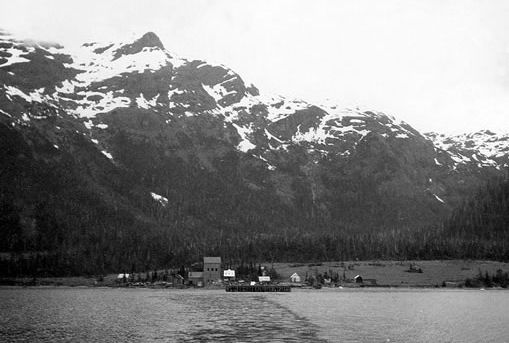
                                     1898: Ellamar Mining Co. formed NW of Cordova for copper mining, by 1900 the first shipment of copper is sent from Ellamar.  The completion of the mine forced the village of Tatitlek to move to a different location.  The mine provided employment to the villagers changing their subsistence lifestyle and increased dependence on outside supplies.


The St. Peter in Alaska
                                     1741:  Vitus Bering’s ship the St. Peter visits Kayak Island, with naturalist Georg Steller on board this is the start of Russian influence on the native population of the Prince William Sound. Forced trade results in hostile actions by both groups.  The native population is decimated and is consolidated in to fewer villages.


Connections AKA part 2: 


1750s-1780s Russian trading posts are set up around The Prince William Sound bringing Alaska Natives in contact with Europeans. This results in the spread of the Orthodox church to the villages and the groups intermarrying changing Alaska forever.

The Great Alaskan Earthquake Strikes on Good Friday.  Valdez and Chenega are destroyed by a Tsunami.  The towns are moved to a safer location, Valdez (1965), Chenega Bay rebuilt on Evans Island  (1984).  Government grants help fund tsunami research at the Geophysical Institute at University Alaska Fairbanks to prevent further loss of life.

Discovery of Oil on the North Slope of  Alaska (1968) causes a dilemma on how to deliver it to the lower 48 states.  A pipeline is built to Valdez (1974-1977) a length of over 800 miles,  creating massive employment throughout Alaska.  Oil flows in to tankers and taken through the Prince William sound (1977).  The Exxon Valdez strikes Bligh Reef and spills millions of gallons of oil (1989).

Sunday, April 15, 2012

Module IX the end is near


Alaska Permanent Fund - $41+ billion. It is our "rainy day account". So, is it "raining" yet?  How hard is it raining?  Is it time to spend some of the earnings of the AK Permanent Fund to provide for state services?  What arguments would you present to legislators reluctant to confront this issue?

Great Article on the issue. Alaska Dispatch
As a new person to Alaska I tread into this subject carefully due to its sensitive nature and because of the PFD dividend each year everyone has an opinion on the subject.  I think the Alaska Permanent Fund is a great idea and one that I wish every state had.  Oregon (my home state) has been struggling with implementing this “rainy day fund” for years and not that it has been put in place everyone wants to use it.  This is the same feeling I am getting about the Alaska fund.  There is never enough money to go around and since all of us are in education it is never more obvious. The reports out of Juno this year are not good for funding levels and my district has had to layoff teachers including one of our staff of 3.  With all of that said I sill don’t agree that we should be tapping the fund, yet.  

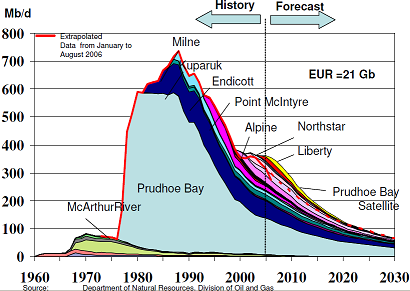
Alaskan Oil Production Levels; Past and Future The Standard
As was stated in the readings Alaska was one of the poorest states prior to the discovery of oil. Since that discovery many necessary things have been paid for with oil money but this time of abundance may be coming to an end.  The decrease in production has been steady over the past 20 years.  Propped up by higher oil prices the state has not had to confront this issue for the most part.  Now I know that the price fluctuate but with the dramatic demand of oil increasing all around the world from countries such as China, India and Brazil it will not return it to the low prices of the 1990’s.  This will help the state continue to put off the issue but the levels will never return to the highs after the North Slope discoveries.

Stock up on camping gear.
         I would like to see the money sill held for that emergency moment when Alaska is faced with a new challenge.  What could be done in the mean time to help fill some of the gaps in state services is to reduce the dividend and place that money in to needed areas.  While I know that this is only an observation the money I see come from the PFD is used as a gift and spend that way.  Many new “toys” appear and the people that are doing could use the money for bills.  I know that the argument is made that it helps make up for the higher cost of living up here but I have yet to see that happening.  That money invested in schools would have a much higher impact on the health of the state than in the pockets of individuals.  I look forward to comments on this. 


  Identify the Alaska Senate and House Districts in which you live (Use current, not pending, letter and number.) Identify the name and political party of your state senator and representative.  Identify the type of local government you have (city? borough? what class?)  Identify the tribal government, if any, in your area, and if possible find out if it is an IRA or traditional council.  

Oregon State Seal

I am new to the sate and had been very active in Oregon politically.  I even worked for two legislative sessions as a chief of staff for an Oregon State Senator.  So one of the first things I did when I got up here was register to vote.  Sadly that was 9 months ago and I have not thought of politics since then.  So when this class question came up about identifying your political district and representatives I thought it would be a good project.   
Albert Kookesh
William "Bill" Thomas Jr. (R)
First off I was surprised how difficult it was to locate the information.  Now I live in a small small village and so it never pops up on the list of towns someone represents.  I started my search by looking for who represents Valdez and Cordova making the assumption that would cover my town.  It looks like I am in Senate District C represented by Senator Albert Kookesh and House District 5 represented by William "Bill" Thomas Jr..  Kookesh is a Democrat and Thomas is a Republican.  That is the entire limit of my representation. 

The village of Tatitlek is led by a village president David Totemoff and a village IRA council that is only open up to tribal members.  Due to some very difficult village politics and a dramatically shrinking population the council has not met in several years and seems to be on cruse control. 

Extend: How might you use content from this module in your professional practice? 
      Next year I will be teaching government to my students to correspond to the Presidential election but that is national politics and will have far less impact on their lives compared to local issues.  The resources from this module have giving me a great start on how to cover the local issues especially being new to the state.  I have been saving a bunch of links from other peoples bolgs so that I will have more than enough information when I plan this summer.

Other Blogs

Heather's Alaskan Exploration:  Wow was I impressed by her format and links to some great information.  I am still not sure how to get my format to look as good as hers.


Crossing Alaska: good information on World War two.  I am not sure what happened to some of the images but the content was good.

Learn Alaska or Bust:  Again a good summary of World War two.  His content has been spot on every week and an interesting read.  I thought is tie in with Palin a good connection because that is how the rest of America sees on the map, right next to Russia.

Evaluation

This was a lot of information to digest this week but all very much needed.  I like to think of it as the new Alaskan quick start kit.  If more time was possible for the class this may have been broken up into two weeks to allow for  more of it to settle in but for now it whetted my appetite.  I am looking forward to the final project and we will see how all that connecting goes.

Sunday, April 8, 2012

Module 8


  Describe the legacy of World War II for Alaska.  What happened in Alaska after the war that is largely attributable to WW II?  What are Alaskans living with today that is attributable to WW II? 


World War Two dramatically changed Alaska there is no doubt about that. The first thing it did was move Alaska to the forefront of Americas consciousness.  Before the war Alaska was a place of novels and adventure. With the invasion of the Aleutians and focus on the Pacific newsreels brought Alaska to the lower 48. People were able to see what life was like up here and along with newsreels came a flood of federal money.  


I always love this film made by the future Dr. Seuss.

The largest and most obvious project and continuing legacy of WWII was the first land round from the lower 48. The Alaskan Highway made it possible for average American to drive and start a new life in Alaska.  This is exactly what I did last summer and I want to say the work that went into that road was immense. Completed in just a few years cutting through some of the most difficult terrain, it was project that only the federal government could have undertaken.

Me at mile 0 of the Alaskan Highway


Roads were not the only things that were built, military projects sprung up all over such as ports, airfields and bases.  Many of these are still in use today as military facilities but also many have been converted for civilian use. All of these projects brought new workers in and many stayed to make a life up here. All of the federal money gave Alaska a much larger infrastructure than could have been paid for by just the population base.

Alaska is living with many negative legacies of WWII such as pollution, and displaced populations but the one that affects everyone daily is the dependence on the federal government on paying the bills. With such a small population, well positioned Congressional representatives and many federal sites Alaska is the number one receiver of federal dollars per capita.  I am not one to complain with it benefitting me but I does make Alaska very dependent on outside funding and it could be a problem in the future. 
Map of how much federal highway money each state gets

Graphical representation of federal earmarks

Federal stimulus money
I know the issue is not a simple one (population, area, etc.) but it is one that people need to think about.


Is there a National Guard unit in your area?  Describe it, including its mission, size, and recent activities.
For me this examine quest was not to hard to chose since I am a member of the Alaska National Guard.  This is a new experience for me since I had been a member of the Oregon Guard for 10 years prior but I am proud to have joined such a storied organization. 

Directly linked from the Alaska territorial scouts AKA Eskimo scouts or the Tundra Army I am part of the 1-127th reconnaissance and surveillance squadron.  In civilian speak we are the eyes and ears of the army, trained to locate the enemy.  Made up of cavalry scouts we use HUMVEEs, snow machines, and other vehicles to scout ahead of the lines.  

The different troops are from all over the state including Barrow, Fairbanks, Kodiak, and Kenai.  This makes it hard at times for everyone to get together but also provides a very diverse of Alaskans.  In addition we are made up of about ¼ native Alaskans.
This unit has deployed to Iraq and Afghanistan in the past 10 years in whole and in smaller groups.  Back in Alaska they have helped out with flooding, security and in the last series of storms to strike the Kenai region they open up Red Cross shelters.

Extend

My village itself was not directly affect by WWII due to its small nature and location but the region of the Prince Williams Sound was.  Observation posts were set up on some of the outer islands and a Cordova had its airfield improved and a garrison of soldiers stationed.  Many men from the region enlisted in the military and served with distinction. 


Other Blogs

Excited about Alaska has a great write up about the evacuation of the Aleuts during World War Two. The single empty room picture was very powerful.

Alaskan History: A newcomers perspective has a great background that gets the feel of Alaska right away. 
Gary's Alaska blog proves without a doubt the strategic importance of Alaska's position in geopolitical politics.  The use of paps gives a quick overview and are well done.


Evaluation

This unit was a fun and easy one for me since my specialty was military history.  I had not spent much time looking in to Alaska but the readings did a great job and I ordered the book listed so I could have a much greater understanding this summer.  We are almost done with the class and I have to admit I am starting to enjoy the bogging part (only a little)

Sunday, April 1, 2012

Module 7


How have the settlement patterns of Alaska been a reflection of the natural landscape, distance, resources, and the economy?

Refugees
The movement of people has always been for a reason.  Very few people move from a location if it provides everything they need.  In the past people moved for more food or a safer location, event today this drives many people to leave.  Commerce drove the Russians to come to Alaska The first non-native populations were located at key economic points such as Kodiak Island. These sites gave them access to a good port, groups of natives that brought furs and resources to provide enough food to require minimal importation of goods.

We the start of the American period populations moved for the same reasons as the Russians, good locations of resources that could earn them a profit. Most of the first settlements were on the coast taking advantage of the plentiful natural resources that came from the water.  Whales and fish drove this early economy.  These towns were wildly spaced apart and dotted the southeast coast. 

Ruby Alaska 1913
The Discovery of gold started the shift of people moving inland.  Towns rose over night in the gold fields. Becoming thriving communities only to be ghost towns in a few years.  The towns that lasted were the ones that provided the supplies and communication points for points farther out.  Towns like Valdez, Homer and Fairbanks grew disputed the dramatically shifting populations.  These anchor cities were able to survive because they had steady employment.  This was also the reason for the growth of Anchorage.  A city created to provide labor on the Alaskan Railroad that ended up lasting due to the need of on going workers after its completion. 

The distribution of population in Alaska has stayed steady since the founding of Anchorage.  The majority of people live in the Southeast region and despite the discovery of oil in the second half of the 20th Century the population grew but the distribution did not change.  This is because Anchorage has the largest population and so the majority of economic opportunities are there. 

Distribution of population in Alaska
The University of Alaska Fairbanks is the farthest north public university in the United States.  What are the specialized academic areas at UAF that make it unique among American universities?

UAF Logo
I have been very impressed with UAF over the years.  I had my first chance to come visit Alaska and more specifically UAF during college when I was invited to attend a conference of Northwest student leaders.  Coming to visit in November was an adventure compared to the climate of Oregon, but not as much as the students from Hawaii who had never seen snow. The campus was neat with all the tunnels but it was the programs that set it apart. 

Many of these programs I have had the opportunity to work with over the past year as I teach here in Alaska.  The specialties that I have notices are for obvious reasons connected to the arctic.  The Sea Ice program, and Glacier program have made dramatic observations about climate change. Pushing the know boundaries about ice science.  The geophysical institute based at UAF has spent years integrating western science and native cultures into a  curriculum used around the state. 

Besides science UAF has pushed to save native languages and taught culturally sensitive anthropology.  The push to bring in Alaskan natives into school and provide majors that are useful to village life has been important in the past few years.
Sea Ice Program

EXTEND
Are there particular challenges faced by those in your community related to health care? Feel free to share those.

The clinic is behind the red house
As most of you know my town is very small about 60 people and so the health care is limited.  Being off of the road system and no regular flights has further complicated regular health care.  

Our community is serviced by a clinic run by the local corporation.  Full time we have a nursing assistant who can dispense basic medicines and patch minor injuries.  They also help with diagnosing anything that needs to be seen by someone more skilled.  We have a doctor fly in and stay for about 3-5 days once a month and nurses twice a month.  Most care requires people to be flown out to the hospital in Anchorage and so medical charters are common.

This system has been difficult for me since my son has health issues and requires possible access to a hospital at a lot quicker notice that can usually be provided.  Emergency fights are done by the Coast Guard if the weather is bad but even then they can be hindered. The limited availability of medical care has forced be to not renew my teaching contract for next year so that we can be closer to the larger population areas.

Other Blogs

Peter's Alaska Blog was spot on in his discussion of media and Alaska.  While I don't think I ever saw Northern Lights I agree with his point on Alaska as a starting over point.  I myself moved up to Alaska looking for a job.  The idea of a new place also dove me.  Not sure if it was the Simpsons that pushed me or not, could be.

Exploring Alaska's cultures was good this week.  I like the part of Alaska in children's story books and I did not realize how often it is referenced even in ones not written by Alaskan writers.

Holly Explores Alaska: First off love the font finally one that I can read without having to move the laptop closer.  It was interesting reading about the Ft. Knox Mine.  I did not know about it until your blog.  While it does bring up environmental issues the economic impact is undeniable.

Reflection

This unit was a quick read and was very interesting to read why people settled in what location.  I was surprised to see how many mistakes in the dates and over all editing of the population and settlement reading (not in your blog the linked article).  I am a date person and they were off by a century and kept messing with my head.   "In the years between 1967 and the Klondike gold rush of 1898 when thousands of people surged to Alaska, a few new settlements were founded."   Nothing to major, I know that I am guilty of it many times over and over and over.  I am looking forward to next weeks module about WWII.

Monday, March 19, 2012

Module 6

What are issues facing Alaskans today related to transportation and communication?
Construction on the Glenn Highway
The main issue that is facing Alaskans today for their transportation system is also affecting the rest of the United States, maintenance.  We have built a very impressive system here in Alaska cutting through some of the most inhospitable terrain and climate. But if you look at when they were built it was decades ago.  The Glenn Highway (1942) The Richardson Highway (1920s) are just 2 examples.  The state is now trying to just maintain what has been built.  Without large federal projects most of the state money just keeps a holding pattern on their conditions. 

Map of the different highways in Alaska
Besides the issue of money it is the limited population that many of these roads would serve.  It is very hard to justify the expense of building a multimillion dollar road to a community of 100.  The issue of the bridge to nowhere still haunts the state and now the bar to build a new road has been set very high. In my village they have talked about a road that would connect them to Valdez but most people are resistant due to the fact that it would change the village forever. This is another issue that most people don't think about when a road is suggested.


What were the challenges in the development of communication systems?
Walking the Valdez glacier
The resiliency of the Alaskan communication systems has been very impressive and the readings clearly show that.  No matter what the communication system; be it mail, or telecommunications they were all dramatically affected by 4 things: distance, weather, geography, technology. The establishment of the US postal service at the outset of the handover shows in importance of communication. While it took a while for it to move beyond Sitka with any regularity attempts were made to spread it farther north. The sheer distance between points made contact with the lower states slow added in the rugged conditions and possible weather delays times of over a year were not unheard off. I have this image of men climbing up the glacier out of Valdez taking the “All American Rout” packing the mail with them.  The other thing that I was impressed to learn was how much mail was hauled by dog sled.  It puts the Pony Express to shame when you think about what dog sleaders had to put up with to deliver the mail.
Alaskan sled dog mail carrier from 1910
            It was the invention of air mail that was able to give Alaska the first regular mail service and over come so many of the challenges that normally hindered the mail.  Now only weather could really stop the mail and I am going to tell you based off my mail situation “Neither snow nor rain nor heat nor gloom of night stays these couriers from the swift completion of their appointed rounds.”  This is not true and all of these stop my mail from coming.   Now the mail is the lifeline of many towns around Alaska.  It provides not as much communication but a way of surviving with all the food deliveries.


Extend: How dependent is your community on air transportation?  

Alaska Air Transit over Tatitlek
Living off of the road system is a completely new situation for me.  Growing up in suburb of Portland, Oregon I never was without an opportunity for food or outside entertainment.  Now that I am in Tatitlek I have learned how fragile our communication is with the outside world.  My village has no regular air service and is charter only.  So when I want to leave it is hope that another person has chartered a flight or plunk down $1300 for my one way ticket.  Almost all the food for the village comes in by air and all of the mail. Since our mail comes in by air we are often cut off for weeks with no possibility of packages going in or out.  Air is not our only way in but is the fastest and most practical for small items.  By sea Valdez is only 30 miles away but not a lot of people have boats and even in Valdez items are expensive.


Other Blogs

My Cove and beyond uses great pictures to tell the story.  I am impressed how he was able to get them all to line up and look that well.  Also I was impressed that he was able to find so many different ones.

Miss Mannan had a great write up this week.  The section about the rail transportation system right on.

Alaska Reflections:  I was impressed with the embedded video this week.  I have not been so daring to try and figure it all out yet.  Also the video added a great element to the blog.

Reflection

This week was hard for me due to my schedule but I found the reading easy and very interesting.  The amount of effort that was put into each different communication and transportation component boggles the mind at times.  Just thinking about how long it would take to string the telegraph system one post a time.  I am looking forward to the next module but also glad for the break.

Sunday, March 11, 2012

Module V


What have been the major components of the Alaska economy during the American period of 1867-present?

The Alaska Commercial Company Cir 1880s UAA photo
The Alaskan economy has gone thorough many changes and I think the best way to describe it is boom and bust.  Very little restraint has been shown when a resource has been discovered and like the tragedy of commons, people will do what they can to only benefit themselves. From the start when the Americans took over fur was on the decline.  Over hunted by the Russians  and finished by the Americans most fur baring animals was getting harder and harder to find. This was also happening to the whales, hunted for oil among other things.  For both industries they brought a lot of people into the state and money but were unsustainable.

Skagway, Alaska 1899
Prior to oil gold was the largest boom to the Alaskan economy.  Discovered several years after the American purchase of Alaska it brought thousands of people the area to try their luck.  Creating boomtowns out of Valdez, Nome, Seward, and Fairbanks to name a few. While most people would not strike it rich they did provide a large population boost.  These gold rushes were just the start of the extraction of minerals in Alaska.  As the booms ended large companies moved in and started commercial mining operations on a large scale all over Alaska.  From the copper mines around Cordova to the possible Pebble Mine.  Mining still is an important part of the economy even today.

Alaska Commercial Fishing photo: Alaska Fish and game
Alaska has been gifted by some of the best fishing waters in the entire world. This past week I was in Seward for a school field trip to the AVTEC facility.  During our trip we had a chance to visit the Alaska Sealife Center and. I was just astounded on how much fish is pulled from the Bering Sea every year.  Even today as the number of fish have drastically declined in some areas over 1.84 million metric tons of fish were harvested in 2011.  All of this brought in 1.3 billion dollars to the Alaskan economy in one year alone. On a much smaller scale, fishing is very important to my village it has sustained them for thousands of years. In addition to this fact commercial fishing is the only job outside of the council office.  This way of life has transitioned from a subsistence harvest to a commercial one. But the fishing here is a shadow of what it used to be due to another part of the Alaskan economy affecting the harvest. 

Exxon Valdez, Apr. 13 1989
On March 24, 1989 the Exxon Valdez collided with Bligh Reef 7 miles from my village.  1500 miles of devastated coastline later the fishing industry around the area was gone.  By why was a large tanker heading through such a pristine country? Oil, since Russians discovered it in had not played a major part of the Alaskan economy.  The costs are high to collect and process it, not to mention the very high transportation costs. By the 1950s large enough deposits were causing people to take notice and put the needed capital into recovering it.  But it was not until the massive discoveries on the North Slope that Alaska was changed forever into an oil producing state.  With roughly 13 billion barrels of oil Alaska now was on the map of major oil producers. This made the State of Alaska dependent on oil for most of its budget, roughly 80% at times.  Boom and bust cycles in the price of oil has forced the state to try and diversify is economy.  This has happened a little but it will be many years before black gold does not drive the state.


What were the primary motivations for Americans moving to Alaska in the late 1800's?

I can relate a lot to the early American settlers to Alaska.  I have a bumper sticker on my truck that reads “Alaska, North to the future.” People moved to Alaska to make money pure and simple. If you look at what people had to go through to make it to the gold fields, or the conditions they lived in at the whaling stations you can’t tell me it was for the view.  The lure of life changing amount of money for some discomfort was all it took for many. 
Packing the trailer to move to Alaska, Summer 2011
There was another factor that also drove people to Alaska besides money.  The lure of adventure, the unknown.  At this time America was settled from the east to the west.  The blank spaces in the map had been filled in and a person could take the train across the country in comfort.  For many it may have been that they felt fenced in.  But in Alaska you could be what you wanted to be. 
I put myself in the latter category (obviously as a teacher money was not going to be the determining factor).  I packed my entire family up in a used truck, built a trailer and drove north. Other than myself no one in my family had been to Alaska let alone the small remote village that we were moving to. But what made us do it was the thrill of adventure.  Something that most people would never do it their lives.

Extend: Describe the economic base for your area of Alaska and share any current issues confronting the local residents.
Tatitlek Alaska in the summer
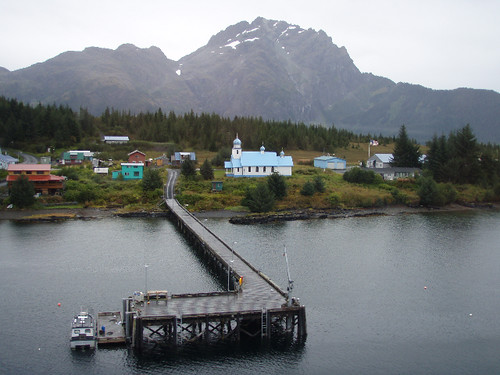
The small village of Tatitlek has been around for a long time.  It was one of the villages listed by the Russians when they arrived.  Predominately a subsistence village up until the start of the 20th Century it had a modern economy forced upon it.  The village was moved 2 miles when copper was discovered and a mine was built.  When that closed a cannery was built and also closed a few years later 1950s.  Since that time no major jobs have been located in our community.  A few commercial fishing boats operated out of the village but that ended with the Exxon Valdez oil spill. Currently the town has no real economy to speak of.  We have no stores, or any real jobs other than make work ones by the tribal office.  The lack of the economy has contributed greatly to the dramatic shrinkage of the village now down to 60 people.  The local corporations have been trying to develop a long term economic plan but nothing has been presented.

Other Blogs

Investigate Alaska was very clear and easy to read I attempted to emulate that this week with my blog. Also her use of hyperlinks in the text was very useful.
Heather’s Alaskan Exploration was very well done.  Besides the insightful responses to the questions the blending of the pictures into the text was very well done.  I also related a lot to the economy of her town.
Explore AK was well done and the response was very complete.  The articles he posted helped explain and increase the usefulness of his blog.

Response
This weeks blog was a wealth of information (maybe a bit overwhelming at times) that helped me get a much better grasp on what goes on in Alaska.  I think the most surprising thing that I saw was the graph of how much of the Alaskan economy was dominated by 2 main areas: federal government and petroleum.  I have seen how massive the government is here in Alaska just by drilling with my army unit.  The resources available are crazy and the land set aside is immense. 
I am looking forward to the next module about transportation. After driving the Alaska/Canadian Highway last summer I am very impressed on what it took for them to complete it so fast.

Sunday, March 4, 2012

Module IV


How is the experience of Russian America an example of 18th-19th century imperialism and colonialism?

There are so many aspects of the Russian imperialism, colonialism, occupation that I wanted to look at an unique one that took place in my region.  There is an excellent book called Looking Both Ways, that discusses the history of the Alutiiq people. This population one of the first that had contact with the Russians and most of the trading posts were set up in their homelands.

A creole priest from Aleutian Islands, Peter Dobrovolskii


I learned of a unique part of history, that was the establishment of a Creole class.   Many Russian hunters married into the Native communities. A Creole class was established which included "descendants of these marriages and others who were assimilated into the Russian culture without a direct family relationship." In Paul's Harbor, Russia or Sitka, some Creoles were educated and trained. They served as clerks, navigators and managers basically an "in between" class.  They also were instrumental in helping others to Russian literacy.

The Russians also used the Creoles as a portable population. St. Paul Harbor, Afognak, and Spruce Islands saw Creole families settling there in the 1830's. In the late 1830's, a smallpox epidemic wiped out a good percentage of the people. In the 1840's, the Russian company located some Russian and Creole retirees at Ninilchik on Cook Inlet. There was further relocation after the epidemic in the 1840's, mainly to places near the Russian posts.

By establishing a population that they could “trust” and one that was dependent on them they were better able to manage their business on the edges of the frontier.  This also had a lasting impact on the native culture here in SE Alaska where I teach Vlassoffs, Totemoffs etc.

What other nations demonstrated an interest in Alaska?  Why?

Russia was not the only country interested in Alaska, Britain its political rival at times also had designs on the area.  Discovered for the British in 1778  by Captain James Cook the famous explore who could also claim to have “found” Hawaii, Australia, and many other Pacific territories. His reason for exploring the region was twofold. One reason was to discover a possible northern passage to China in the hopes of expanding trade. He tried unsuccessfully to enter the Bering Strait several times and travel farther north. So he headed South back to Hawaii where he upset some locals and died as a result. The second reason for his Alaskan adventures was to help establish British claim on the west coast of North America. During this period just looking at an area could increase your “legal” right over a territory.  His maps of the area would also allow England to follow up with forts and trading posts. Most of the trading posts that Britain established were in the interior due to successful trade routs through Canada.
Britain and Russia was not the only European country interested in Alaska. Spain not to be out done by its rivals attempted to establish it only control by moving up the coast from the California area where it had missions. When the Pope finally resolved the dispute between Spain and Portugal in 1493 it gave Spain all of the territories west of Brazil.  Now no country was really following this Papal Bull by the 18th century but Spain sure wanted people to. So not to be out done the Spanish king sent many different expeditions throughout the lower part of Alaska. Most of the expeditions just mapped the area looked for the Northwest Passage but some did come in contact with the Russian trading posts.  All the interactions were peaceful and in the end Spain realized that an Alaska colony was nonstarter so left and ceded its claim on the area to the United States in 1819.

See if there is one or more maps or images you'd like to post on your blog.  
 

Early Map of North and South America  http://vilda.alaska.edu
The reason that I picked this first map is that I am always amazed to think that people would sail out into the unknown with maybe a map as basic as this and hope to come back.  They would go out and fill in those blank spaces.  Maybe strike it rich or go down in history but the majority would remain unknown.


English map of Russian voyages. http://vilda.alaska.edu

I chose this one with thought this was great propaganda for the Russians.  Here is a map printed in English showing where their explorers have gone and what area they have claimed.  The other thought that I had is how detailed it is.  All done by hand and with none of the modern recording technologies.

Others Blogs
This site did an exceptional job of explaining culture.  I like the parts about resistance and Assimilation. These sections fit right in with this weeks module on Russian influence. One has to ask yourself what would I do in that situation.  I would like to say that I would resist but what are the other options?

A very good description of what Alaskan culture is.  I am myself and part of the skin according to his 3 branches.  He did well in compressing all of the different aspects of Alaska in to a easily readable format.

 I agreed on her take on what her culture was.  I liked the part of work ethic being something that she identifies with.  That was something that I found was different in the village.

Reflections

This subject was a very important one for my community due to the large amount of contact that the Russians had with them. The resources that were provide did a good job of painting the whole era.  I like the links to the maps and have spent a lot of time looking around the digital archives.  Now that I have a few weeks under my belt with this blogging thing I think that I am getting better at it.  Will I every want to blog for fun? No! 
Ok update I have been trying to upload this for an hour now.  I have a flight and I HATE this stupid program.   I