Copper Mt.

Copper Mt.

Monday, April 30, 2012

End of the line


Timeline AKA part 1 of the Prince William Sound

 
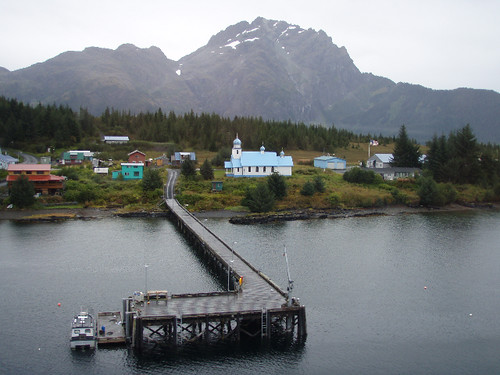
Smith's in Tatitlek
                                    2011: Smiths move to Tatitlek. This is the start of an Alaskan adventure for the Smith family. 
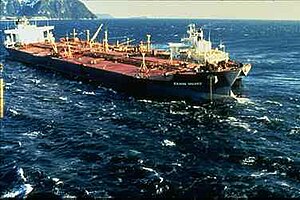


Exxon-Valdez leaking oil
                                    1989: Exxon-Valdez Oil Spill, March 24.  This occurs on Bligh Reef about 10 miles from the village of Tatitlek.  This event fundamentally changes the native villages around the sound.  The destruction of fishing and surrounding environment forced many to leave the villages and take work in 


Pipeline terminal in Valdez
                                        1977:  First oil flows through the pipeline.  The pipeline ends in Valdez resulting in oil tanker traffic heading through the Prince William Sound.  This increases the wealth of the whole region and provides many jobs for local Alaskan Natives.


"Old" Chenega after the earthquake
                                       1964:  Great Alaska Earthquake, March 27.  This is devastating to the village of Chenega when it is wiped out by a tsunami.  23 people were killed in the village a third of the population.  The surviving Chenega residents moved in with family in different villages around the sound.  


Cordova shipping trains for the war
                                       1941-1945:  World War II; black-out curtains, submarine drills.  Local Native Alaskans are asked to monitor the shore and waters for the Japanese.  Many locals enlist in the armed services or move to the cities to help with the war effort.  Villages have more contact with the government and many gain radios as a result
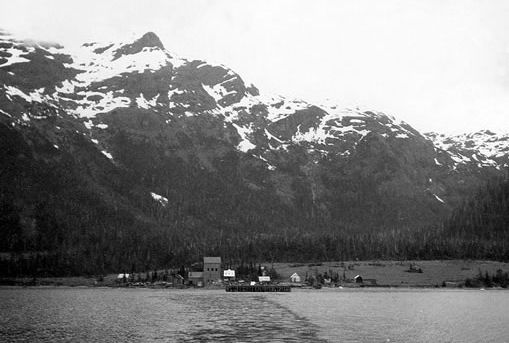


Ellamar 1908
                                     1898: Ellamar Mining Co. formed NW of Cordova for copper mining, by 1900 the first shipment of copper is sent from Ellamar.  The completion of the mine forced the village of Tatitlek to move to a different location.  The mine provided employment to the villagers changing their subsistence lifestyle and increased dependence on outside supplies.


The St. Peter in Alaska
                                     1741:  Vitus Bering’s ship the St. Peter visits Kayak Island, with naturalist Georg Steller on board this is the start of Russian influence on the native population of the Prince William Sound. Forced trade results in hostile actions by both groups.  The native population is decimated and is consolidated in to fewer villages.


Connections AKA part 2: 


1750s-1780s Russian trading posts are set up around The Prince William Sound bringing Alaska Natives in contact with Europeans. This results in the spread of the Orthodox church to the villages and the groups intermarrying changing Alaska forever.

The Great Alaskan Earthquake Strikes on Good Friday.  Valdez and Chenega are destroyed by a Tsunami.  The towns are moved to a safer location, Valdez (1965), Chenega Bay rebuilt on Evans Island  (1984).  Government grants help fund tsunami research at the Geophysical Institute at University Alaska Fairbanks to prevent further loss of life.

Discovery of Oil on the North Slope of  Alaska (1968) causes a dilemma on how to deliver it to the lower 48 states.  A pipeline is built to Valdez (1974-1977) a length of over 800 miles,  creating massive employment throughout Alaska.  Oil flows in to tankers and taken through the Prince William sound (1977).  The Exxon Valdez strikes Bligh Reef and spills millions of gallons of oil (1989).

Sunday, April 15, 2012

Module IX the end is near


Alaska Permanent Fund - $41+ billion. It is our "rainy day account". So, is it "raining" yet?  How hard is it raining?  Is it time to spend some of the earnings of the AK Permanent Fund to provide for state services?  What arguments would you present to legislators reluctant to confront this issue?

Great Article on the issue. Alaska Dispatch
As a new person to Alaska I tread into this subject carefully due to its sensitive nature and because of the PFD dividend each year everyone has an opinion on the subject.  I think the Alaska Permanent Fund is a great idea and one that I wish every state had.  Oregon (my home state) has been struggling with implementing this “rainy day fund” for years and not that it has been put in place everyone wants to use it.  This is the same feeling I am getting about the Alaska fund.  There is never enough money to go around and since all of us are in education it is never more obvious. The reports out of Juno this year are not good for funding levels and my district has had to layoff teachers including one of our staff of 3.  With all of that said I sill don’t agree that we should be tapping the fund, yet.  

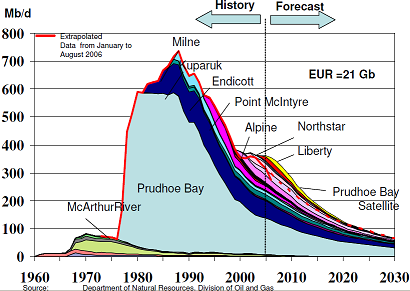
Alaskan Oil Production Levels; Past and Future The Standard
As was stated in the readings Alaska was one of the poorest states prior to the discovery of oil. Since that discovery many necessary things have been paid for with oil money but this time of abundance may be coming to an end.  The decrease in production has been steady over the past 20 years.  Propped up by higher oil prices the state has not had to confront this issue for the most part.  Now I know that the price fluctuate but with the dramatic demand of oil increasing all around the world from countries such as China, India and Brazil it will not return it to the low prices of the 1990’s.  This will help the state continue to put off the issue but the levels will never return to the highs after the North Slope discoveries.

Stock up on camping gear.
         I would like to see the money sill held for that emergency moment when Alaska is faced with a new challenge.  What could be done in the mean time to help fill some of the gaps in state services is to reduce the dividend and place that money in to needed areas.  While I know that this is only an observation the money I see come from the PFD is used as a gift and spend that way.  Many new “toys” appear and the people that are doing could use the money for bills.  I know that the argument is made that it helps make up for the higher cost of living up here but I have yet to see that happening.  That money invested in schools would have a much higher impact on the health of the state than in the pockets of individuals.  I look forward to comments on this. 


  Identify the Alaska Senate and House Districts in which you live (Use current, not pending, letter and number.) Identify the name and political party of your state senator and representative.  Identify the type of local government you have (city? borough? what class?)  Identify the tribal government, if any, in your area, and if possible find out if it is an IRA or traditional council.  

Oregon State Seal

I am new to the sate and had been very active in Oregon politically.  I even worked for two legislative sessions as a chief of staff for an Oregon State Senator.  So one of the first things I did when I got up here was register to vote.  Sadly that was 9 months ago and I have not thought of politics since then.  So when this class question came up about identifying your political district and representatives I thought it would be a good project.   
Albert Kookesh
William "Bill" Thomas Jr. (R)
First off I was surprised how difficult it was to locate the information.  Now I live in a small small village and so it never pops up on the list of towns someone represents.  I started my search by looking for who represents Valdez and Cordova making the assumption that would cover my town.  It looks like I am in Senate District C represented by Senator Albert Kookesh and House District 5 represented by William "Bill" Thomas Jr..  Kookesh is a Democrat and Thomas is a Republican.  That is the entire limit of my representation. 

The village of Tatitlek is led by a village president David Totemoff and a village IRA council that is only open up to tribal members.  Due to some very difficult village politics and a dramatically shrinking population the council has not met in several years and seems to be on cruse control. 

Extend: How might you use content from this module in your professional practice? 
      Next year I will be teaching government to my students to correspond to the Presidential election but that is national politics and will have far less impact on their lives compared to local issues.  The resources from this module have giving me a great start on how to cover the local issues especially being new to the state.  I have been saving a bunch of links from other peoples bolgs so that I will have more than enough information when I plan this summer.

Other Blogs

Heather's Alaskan Exploration:  Wow was I impressed by her format and links to some great information.  I am still not sure how to get my format to look as good as hers.


Crossing Alaska: good information on World War two.  I am not sure what happened to some of the images but the content was good.

Learn Alaska or Bust:  Again a good summary of World War two.  His content has been spot on every week and an interesting read.  I thought is tie in with Palin a good connection because that is how the rest of America sees on the map, right next to Russia.

Evaluation

This was a lot of information to digest this week but all very much needed.  I like to think of it as the new Alaskan quick start kit.  If more time was possible for the class this may have been broken up into two weeks to allow for  more of it to settle in but for now it whetted my appetite.  I am looking forward to the final project and we will see how all that connecting goes.

Sunday, April 8, 2012

Module 8


  Describe the legacy of World War II for Alaska.  What happened in Alaska after the war that is largely attributable to WW II?  What are Alaskans living with today that is attributable to WW II? 


World War Two dramatically changed Alaska there is no doubt about that. The first thing it did was move Alaska to the forefront of Americas consciousness.  Before the war Alaska was a place of novels and adventure. With the invasion of the Aleutians and focus on the Pacific newsreels brought Alaska to the lower 48. People were able to see what life was like up here and along with newsreels came a flood of federal money.  


I always love this film made by the future Dr. Seuss.

The largest and most obvious project and continuing legacy of WWII was the first land round from the lower 48. The Alaskan Highway made it possible for average American to drive and start a new life in Alaska.  This is exactly what I did last summer and I want to say the work that went into that road was immense. Completed in just a few years cutting through some of the most difficult terrain, it was project that only the federal government could have undertaken.

Me at mile 0 of the Alaskan Highway


Roads were not the only things that were built, military projects sprung up all over such as ports, airfields and bases.  Many of these are still in use today as military facilities but also many have been converted for civilian use. All of these projects brought new workers in and many stayed to make a life up here. All of the federal money gave Alaska a much larger infrastructure than could have been paid for by just the population base.

Alaska is living with many negative legacies of WWII such as pollution, and displaced populations but the one that affects everyone daily is the dependence on the federal government on paying the bills. With such a small population, well positioned Congressional representatives and many federal sites Alaska is the number one receiver of federal dollars per capita.  I am not one to complain with it benefitting me but I does make Alaska very dependent on outside funding and it could be a problem in the future. 
Map of how much federal highway money each state gets

Graphical representation of federal earmarks

Federal stimulus money
I know the issue is not a simple one (population, area, etc.) but it is one that people need to think about.


Is there a National Guard unit in your area?  Describe it, including its mission, size, and recent activities.
For me this examine quest was not to hard to chose since I am a member of the Alaska National Guard.  This is a new experience for me since I had been a member of the Oregon Guard for 10 years prior but I am proud to have joined such a storied organization. 

Directly linked from the Alaska territorial scouts AKA Eskimo scouts or the Tundra Army I am part of the 1-127th reconnaissance and surveillance squadron.  In civilian speak we are the eyes and ears of the army, trained to locate the enemy.  Made up of cavalry scouts we use HUMVEEs, snow machines, and other vehicles to scout ahead of the lines.  

The different troops are from all over the state including Barrow, Fairbanks, Kodiak, and Kenai.  This makes it hard at times for everyone to get together but also provides a very diverse of Alaskans.  In addition we are made up of about ¼ native Alaskans.
This unit has deployed to Iraq and Afghanistan in the past 10 years in whole and in smaller groups.  Back in Alaska they have helped out with flooding, security and in the last series of storms to strike the Kenai region they open up Red Cross shelters.

Extend

My village itself was not directly affect by WWII due to its small nature and location but the region of the Prince Williams Sound was.  Observation posts were set up on some of the outer islands and a Cordova had its airfield improved and a garrison of soldiers stationed.  Many men from the region enlisted in the military and served with distinction. 


Other Blogs

Excited about Alaska has a great write up about the evacuation of the Aleuts during World War Two. The single empty room picture was very powerful.

Alaskan History: A newcomers perspective has a great background that gets the feel of Alaska right away. 
Gary's Alaska blog proves without a doubt the strategic importance of Alaska's position in geopolitical politics.  The use of paps gives a quick overview and are well done.


Evaluation

This unit was a fun and easy one for me since my specialty was military history.  I had not spent much time looking in to Alaska but the readings did a great job and I ordered the book listed so I could have a much greater understanding this summer.  We are almost done with the class and I have to admit I am starting to enjoy the bogging part (only a little)

Sunday, April 1, 2012

Module 7


How have the settlement patterns of Alaska been a reflection of the natural landscape, distance, resources, and the economy?

Refugees
The movement of people has always been for a reason.  Very few people move from a location if it provides everything they need.  In the past people moved for more food or a safer location, event today this drives many people to leave.  Commerce drove the Russians to come to Alaska The first non-native populations were located at key economic points such as Kodiak Island. These sites gave them access to a good port, groups of natives that brought furs and resources to provide enough food to require minimal importation of goods.

We the start of the American period populations moved for the same reasons as the Russians, good locations of resources that could earn them a profit. Most of the first settlements were on the coast taking advantage of the plentiful natural resources that came from the water.  Whales and fish drove this early economy.  These towns were wildly spaced apart and dotted the southeast coast. 

Ruby Alaska 1913
The Discovery of gold started the shift of people moving inland.  Towns rose over night in the gold fields. Becoming thriving communities only to be ghost towns in a few years.  The towns that lasted were the ones that provided the supplies and communication points for points farther out.  Towns like Valdez, Homer and Fairbanks grew disputed the dramatically shifting populations.  These anchor cities were able to survive because they had steady employment.  This was also the reason for the growth of Anchorage.  A city created to provide labor on the Alaskan Railroad that ended up lasting due to the need of on going workers after its completion. 

The distribution of population in Alaska has stayed steady since the founding of Anchorage.  The majority of people live in the Southeast region and despite the discovery of oil in the second half of the 20th Century the population grew but the distribution did not change.  This is because Anchorage has the largest population and so the majority of economic opportunities are there. 

Distribution of population in Alaska
The University of Alaska Fairbanks is the farthest north public university in the United States.  What are the specialized academic areas at UAF that make it unique among American universities?

UAF Logo
I have been very impressed with UAF over the years.  I had my first chance to come visit Alaska and more specifically UAF during college when I was invited to attend a conference of Northwest student leaders.  Coming to visit in November was an adventure compared to the climate of Oregon, but not as much as the students from Hawaii who had never seen snow. The campus was neat with all the tunnels but it was the programs that set it apart. 

Many of these programs I have had the opportunity to work with over the past year as I teach here in Alaska.  The specialties that I have notices are for obvious reasons connected to the arctic.  The Sea Ice program, and Glacier program have made dramatic observations about climate change. Pushing the know boundaries about ice science.  The geophysical institute based at UAF has spent years integrating western science and native cultures into a  curriculum used around the state. 

Besides science UAF has pushed to save native languages and taught culturally sensitive anthropology.  The push to bring in Alaskan natives into school and provide majors that are useful to village life has been important in the past few years.
Sea Ice Program

EXTEND
Are there particular challenges faced by those in your community related to health care? Feel free to share those.

The clinic is behind the red house
As most of you know my town is very small about 60 people and so the health care is limited.  Being off of the road system and no regular flights has further complicated regular health care.  

Our community is serviced by a clinic run by the local corporation.  Full time we have a nursing assistant who can dispense basic medicines and patch minor injuries.  They also help with diagnosing anything that needs to be seen by someone more skilled.  We have a doctor fly in and stay for about 3-5 days once a month and nurses twice a month.  Most care requires people to be flown out to the hospital in Anchorage and so medical charters are common.

This system has been difficult for me since my son has health issues and requires possible access to a hospital at a lot quicker notice that can usually be provided.  Emergency fights are done by the Coast Guard if the weather is bad but even then they can be hindered. The limited availability of medical care has forced be to not renew my teaching contract for next year so that we can be closer to the larger population areas.

Other Blogs

Peter's Alaska Blog was spot on in his discussion of media and Alaska.  While I don't think I ever saw Northern Lights I agree with his point on Alaska as a starting over point.  I myself moved up to Alaska looking for a job.  The idea of a new place also dove me.  Not sure if it was the Simpsons that pushed me or not, could be.

Exploring Alaska's cultures was good this week.  I like the part of Alaska in children's story books and I did not realize how often it is referenced even in ones not written by Alaskan writers.

Holly Explores Alaska: First off love the font finally one that I can read without having to move the laptop closer.  It was interesting reading about the Ft. Knox Mine.  I did not know about it until your blog.  While it does bring up environmental issues the economic impact is undeniable.

Reflection

This unit was a quick read and was very interesting to read why people settled in what location.  I was surprised to see how many mistakes in the dates and over all editing of the population and settlement reading (not in your blog the linked article).  I am a date person and they were off by a century and kept messing with my head.   "In the years between 1967 and the Klondike gold rush of 1898 when thousands of people surged to Alaska, a few new settlements were founded."   Nothing to major, I know that I am guilty of it many times over and over and over.  I am looking forward to next weeks module about WWII.